
The Obsession
Antwerp
The watch that began on Post-it notes
Ressence TYPE 10 DN 538 components 100 pieces
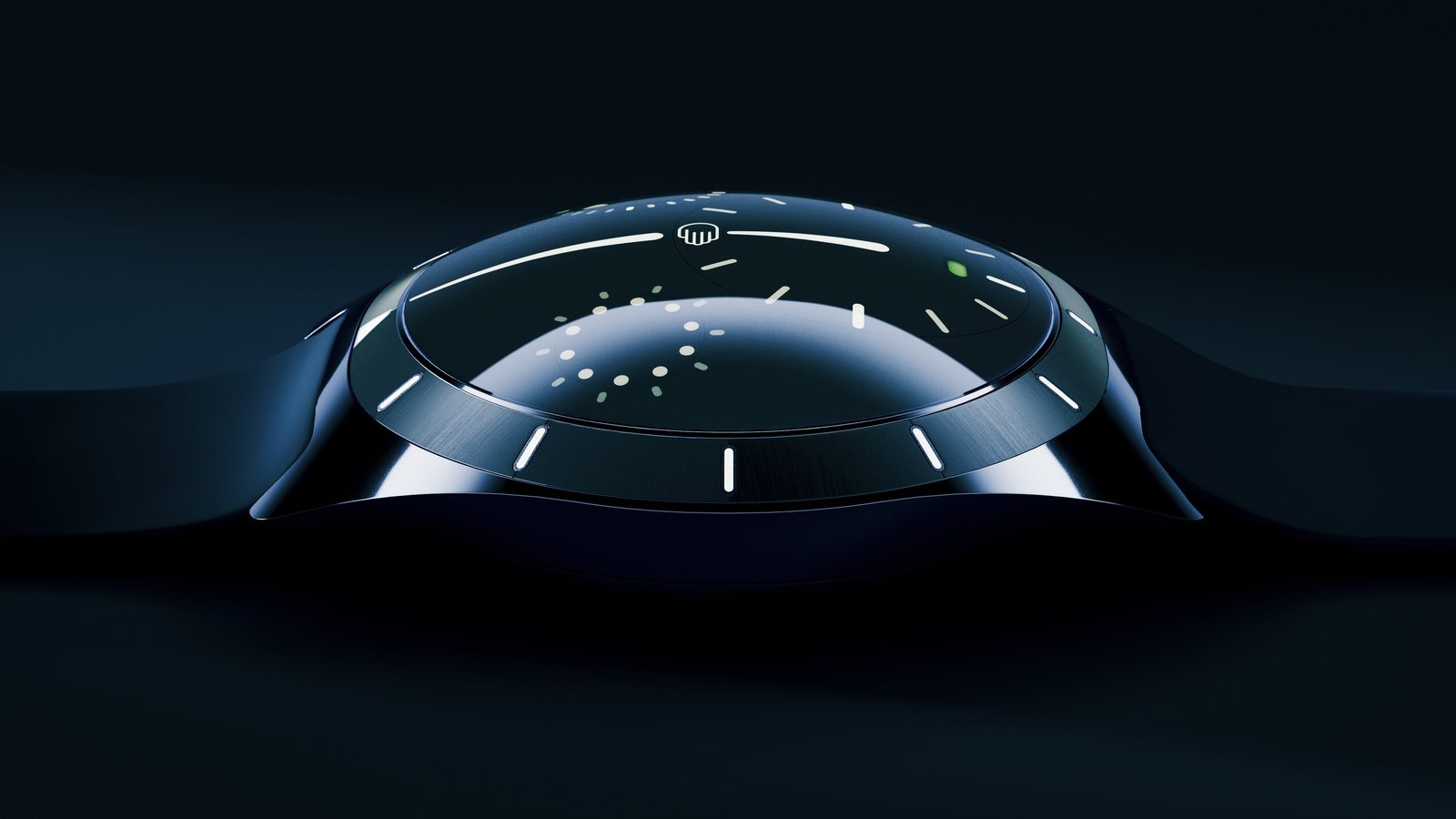
Image courtesy of Ressence
In 2022, Benoît Mintiens stuck a few sketches on Post-it notes to his computer screen. Every few months, another layer went on. Four years later the notes had become the TYPE 10 DN, which his company, Ressence, unveiled at WatchTime New York on October 16. It is the Antwerp brand's first oil-filled watch with an in-house designed movement.
Mintiens is not a watchmaker. He trained as an industrial designer and, according to his company biography, consulted after his 1998 graduation on projects including high-speed trains, airplane interiors, luggage and medical devices. In 2010 he founded Ressence and showed three functional prototypes at Baselworld, with a dial of flush rotating discs. By the company's account, he started Ressence because he could not find the watch he wanted.
Ressence watches still use rotating discs in place of hands, a patented system called ROCS (Ressence Orbital Convex System). In 2013 the TYPE 3 filled the display with oil and won that year's Horological Revelation Prize at the Grand Prix d'Horlogerie de Genève. The oil cancels total internal reflection, so the discs appear to sit directly beneath the crystal.
The compromise was underneath. Until this year, every Ressence ran on a modified third-party movement, typically an ETA base, kept physically separate from the display. In April the TYPE 11 introduced the RW-01, the first movement designed and developed by Ressence, created with a specialist Swiss movement developer. At its launch, Mintiens described it as "an engine," not a showpiece. The TYPE 10 runs on another in-house designed movement, the RW-04, configured specifically for this watch.
Oil is where the engineering turns difficult. The movement beats in air; the discs glide through oil. The TYPE 10 keeps the two in separate, hermetically sealed chambers. The RW-04 turns a disc fitted with micro-magnets on the air side, and a matching disc in the oil follows it without physical contact. The two sets of magnets sit 0.2 mm apart, separated by a titanium membrane 0.1 mm thick. There is no shaft and no opening. An expansion chamber absorbs the change in the oil's volume as temperature shifts, and every oil-filled Ressence is tested for an hour at 60 degrees Celsius and an hour at minus 5 before it ships.
A color scale inside the hour disc shows the oil's temperature, green for its normal range. The 120-second runner doubles as a shock absorber, steadying the magnetic link as the wrist moves. The minute track has 24 titanium segments that alternate luminous sandblasted inserts with brushed surfaces, and the brushing shifts 30 degrees from one segment to the next, so each catches the light differently. The watch contains 538 components, 196 of them in oil, and weighs 82 grams.
Mintiens framed the project as evolution. "The first cars were essentially carriages with engines added to them," he said in the launch announcement. The TYPE 10 is his argument that a watch can follow the same path, from separate components to a single form. "It should feel as if it is one seamless object," Mintiens said of the finished watch. "Almost as if you took a piece of material and carved the watch out of it." The Dark Night edition is limited to 100 pieces.
Read the Story (opens in a new tab)
Sources
- Ressence introduces TYPE 10: Designed to glide through time (press release, TYPE 10 DN), October 1, 2026
- Ressence TYPE 10 (official product page)
- Ressence Werk 01 in-house designed movement RW-01 (press release), March 26, 2026
- Benoît Mintiens: Our Founder (Ressence press biography)
- In conversation with: Benoît Mintiens and the evolution of Ressence (Revolution)
- Ressence Introduces First Proprietary Movement (SJX, David Ichim), April 7, 2026
- Ressence TYPE 10 DN: First In-House Calibre In An Oil-Filled Case (Deployant, Chester Lau), October 17, 2026